
The Voices from the Rwanda Tribunal Project
The Voices from the Rwanda Tribunal collection contains 49 video interviews conducted with personnel from the United Nations International Criminal Tribunal for Rwanda (ICTR). Collected in 2008, these interviews reveal the challenges of striving for justice and reconciliation after genocide. In their own voices, tribunal personnel speak to Rwandans, the international justice community, and the global public, now, 50 and 100 years from now. We offer this digital collection to all people to watch, tag, curate, and download for their use in future projects. This work is carried out under the auspices of the Information School at the University of Washington and is independent from the ICTR, the United Nations and the Government of Rwanda.


We welcome your suggestions for new tags. Tags are words or short phrases that come to mind for you when you watch a video and can be in Kinyarwanda, English, or French. You may suggest as many tags as you like.
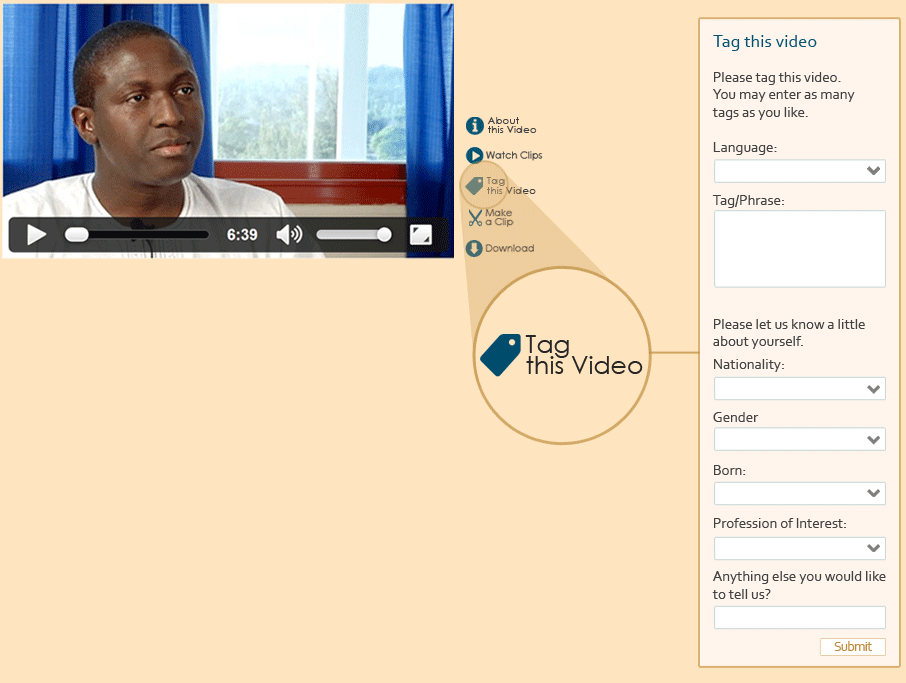
To suggest tags:
- Choose and watch an interview from here.
- On every interview page there is a tab titled “Please help us tag this video clip”. By clicking on the tab, you will be given a space in which to write tags you feel relate to the content of the interview.
- In the next step, we ask for some information about you to help better understand your tag choices.
- When you are done, please click the Submit button in the lower right to save your contribution.
We welcome your suggestions for new video highlights. A video highlight calls out a small section from a video interview that is of particular interest. You might highlight a section because of its content, the way things are phrased, or how the listener responds. Highlights are typically from one to three minutes in length.
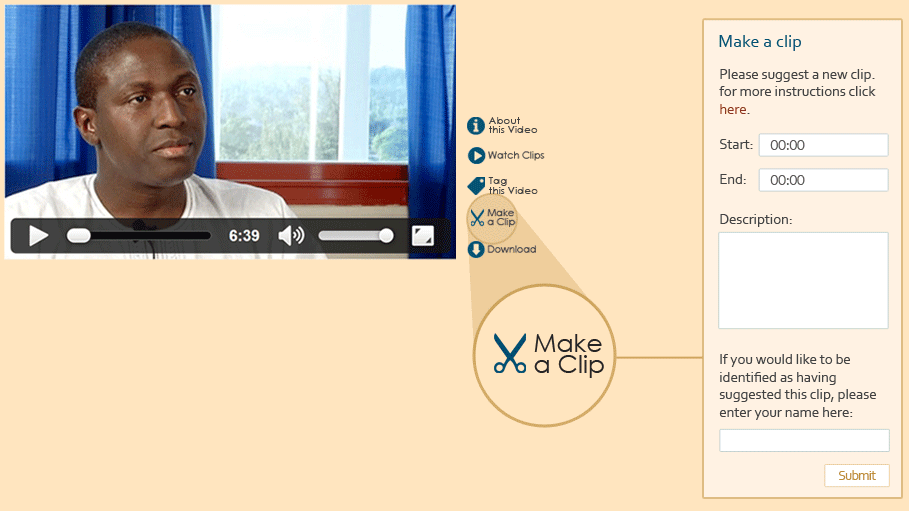
To highlight a video:
- Choose and watch an interview from here.
- On every interview page there is a tab titled “Please suggest a video highlight”. By clicking on the tab, you can enter the time at which the highlight starts and describe what you found important about it.
- When you are done, please click the Submit button in the lower right to save your contribution.
The Voices from the Rwanda Tribunal project is guided by a vision to provide to the world, especially the people of Rwanda, free and open access to these interviews with personnel from the International Criminal Tribunal for Rwanda (ICTR). As part of this vision, all the videos are provided to download. You can download the interviews to use in your projects or to share with other people who do not have access to the website. The interviews are released under a Creative Commons Attribution license.
You can see projects that use these interviews here.
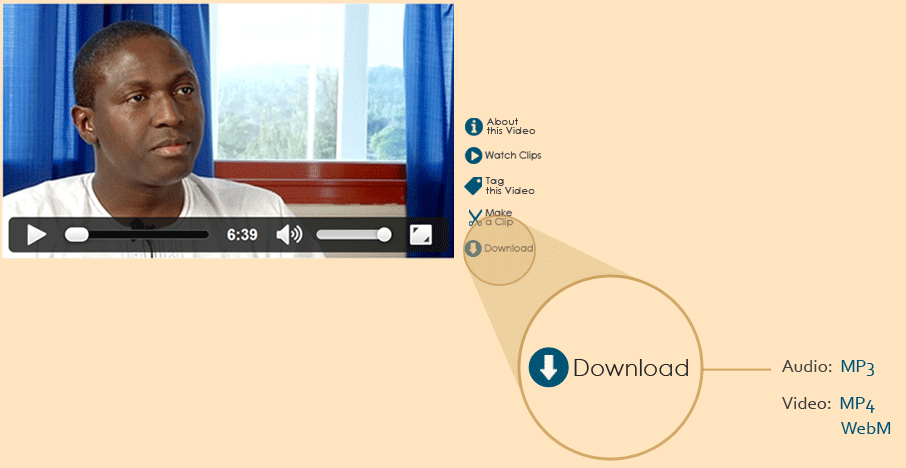
To download an interview:
- Choose an interview from the collection.
- On each interview page, you can download the video or only the audio.